
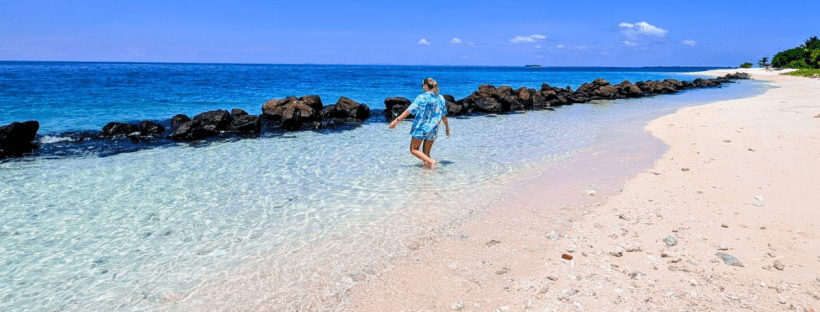
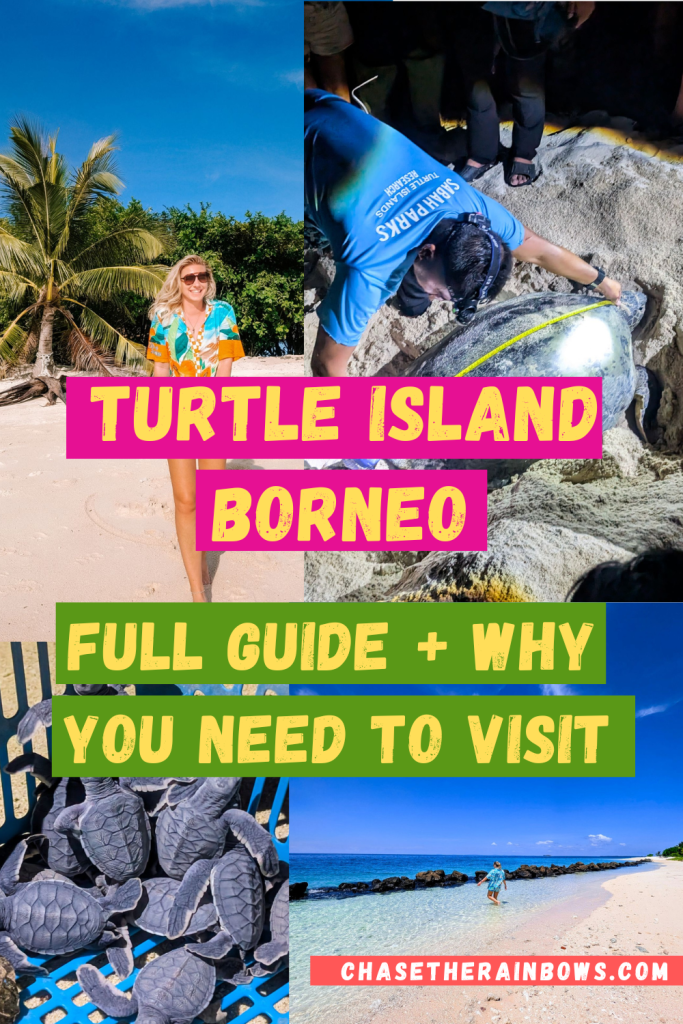
Some experiences stay with you long after you’ve unpacked your bags, and this was one of those moments. Visiting Selingan Island, also known as Turtle Island, was one of those moments for me. From watching a sea turtle lay her eggs under the stars to releasing hatchlings into the ocean, this overnight stay was easily one of the most special wildlife experiences I’ve ever had. If you’re considering adding this to your Borneo itinerary, here’s exactly what to expect.
Where Is It Located
Selingan Island is one of three “Turtle Islands,” located around 40 km off the northeast coast of Borneo. The island is only accessible by boat, with a speedboat transfer from Sandakan taking approximately 45 minutes (although it can take a little over an hour in rough weather).
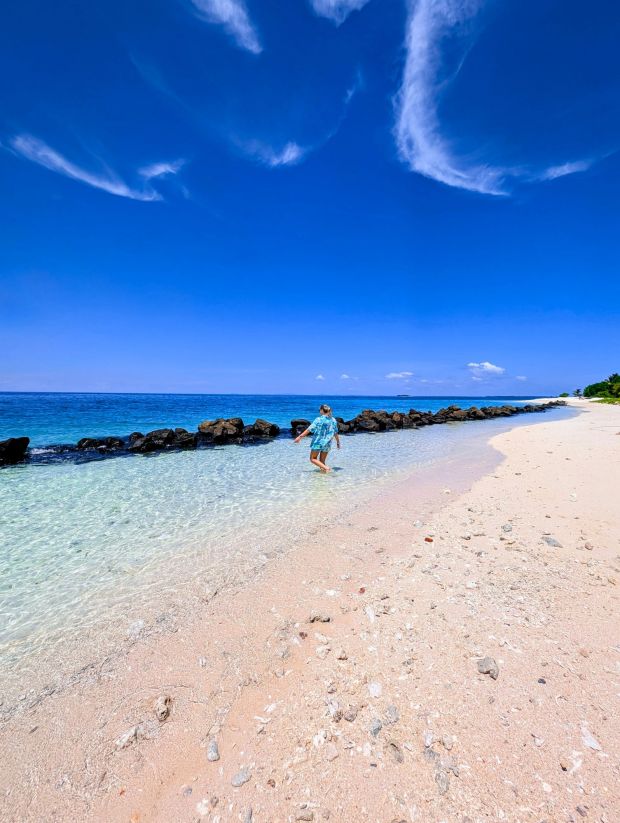
Enjoying the beach 
Map of the island
How To Book
There are several tour companies offering overnight stays on Selingan Island, and honestly, they’re all fairly similar. You’ll stay in the same accommodations, follow the same itinerary, and eat the same meals regardless of which company you choose.
I booked our trip through the lodge we were staying at in Sandakan (Sukau Greenview Lodge), mainly because we were booking multiple tours and could bundle everything together and pay in cash at the end. That said, I did notice tours listed on both GetYourGuide (my personal favourite excursions platform) and Viator, both of which I’ve used countless times and trust for their customer service and cancellation protections.
Run Down of the Itinerary
The boat to Selingan Island departs daily at 10:00am from the port. Upon arrival at the office, you’ll need to pay an additional 10 MYR tourist tax per room in cash. There is luggage storage available, which I highly recommend using if you’re travelling with more than a backpack. There’s no assistance with bags on the island, and the ground is mostly sand, so unless you fancy dragging a suitcase across the beach, pack light and leave larger bags behind.
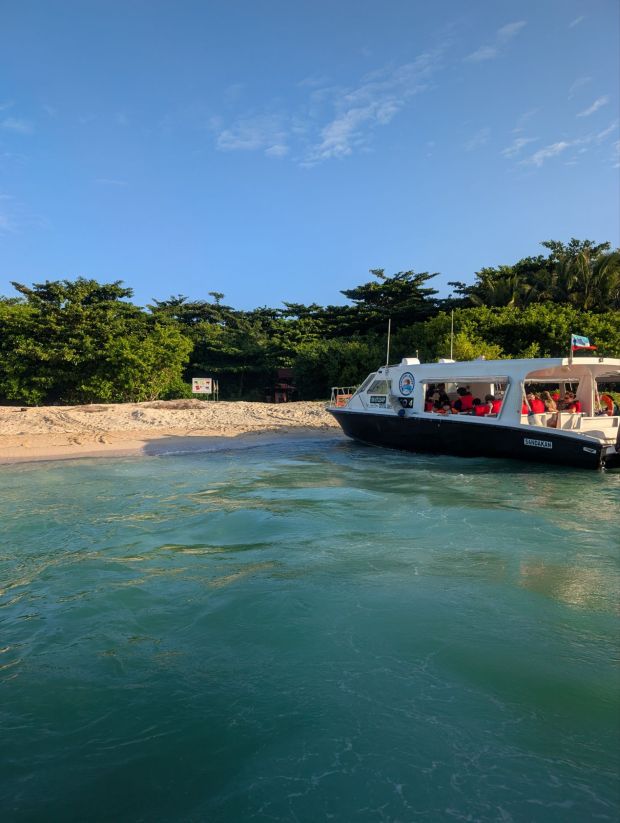
Arriving at Turtle Island 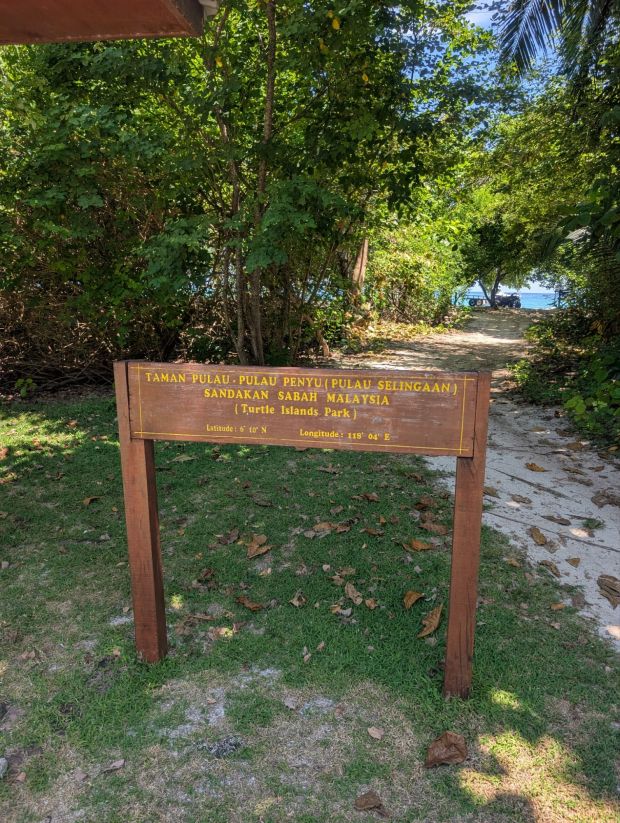
If you plan on snorkelling while on the island, you can purchase a mask and snorkel for 30 MYR. Our boat had six guests and three guides, although larger boats are used for bigger groups. Only 50 guests are allowed to stay overnight on the island, so it never felt crowded.
The boat ride itself was scenic and calm for us, passing through mangrove forests and a stilted water village. The journey took about 45 minutes, though it can take up to 80 minutes in poor weather.
Once we arrived, we were given a brief tour of the island and an overview of the day’s events before being shown to our room. We then explored the beautiful beaches before heading to lunch in the main cafeteria. Lunch was buffet-style, with chicken and fish dishes, fresh salads, and soup.
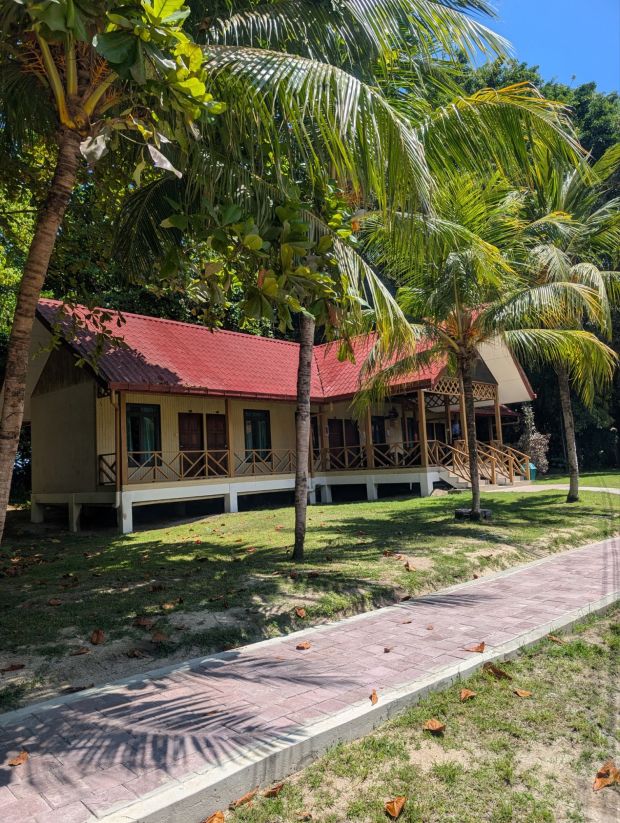
Accommodation Chalet 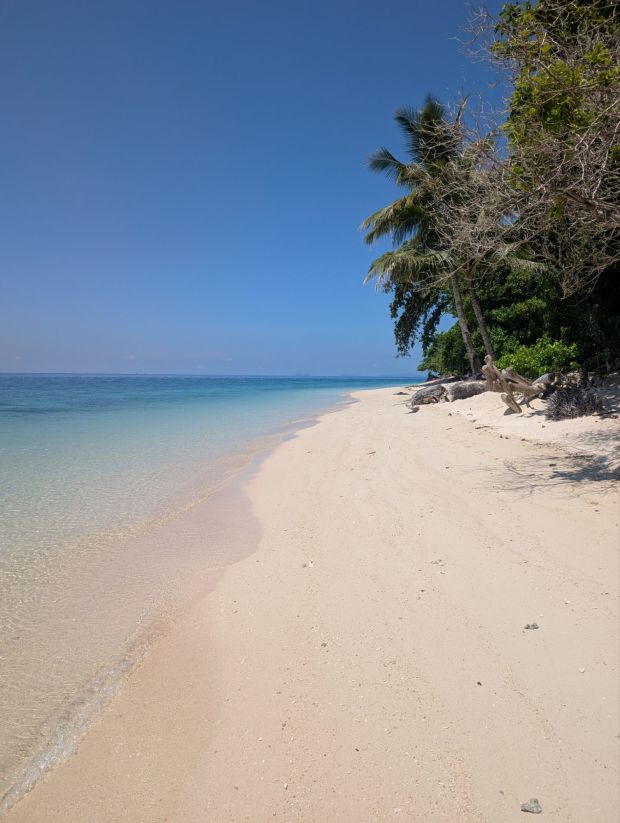
The beach (completely unfiltered!)
We had free time until around 5:30pm, which we spent swimming in crystal-clear water, lounging on the beach, and taking photos that looked straight out of a desktop background. Before swimming, we were asked to complete a simple liability form acknowledging the risks.
Around 5:30–6:00pm, we met our guide to watch the sunset from the beach — absolutely stunning as the sky shifted through shades of pink and orange. At approximately 7:00pm, we watched a short documentary about the conservation work carried out by Sabah Parks, followed by a buffet dinner similar in format to lunch but with different dishes.
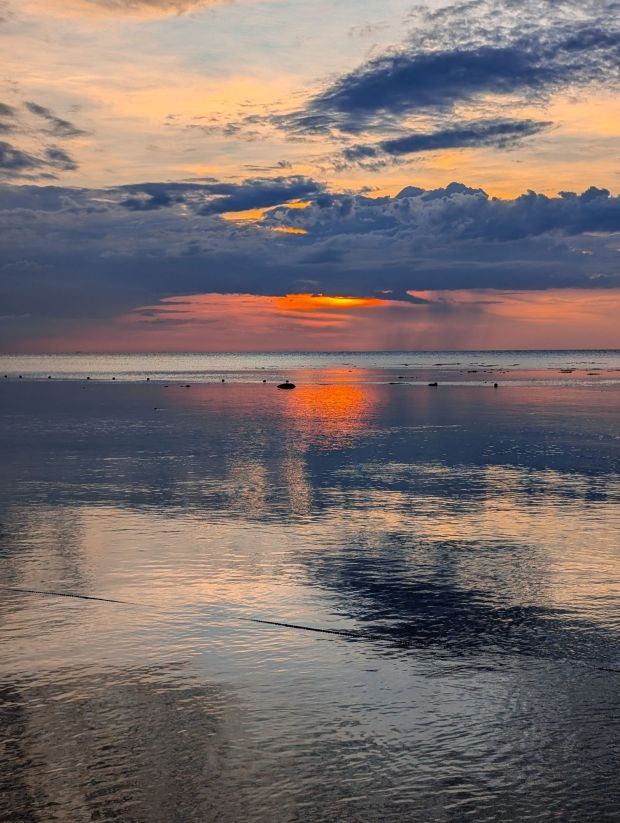
Sunset on Turtle Island 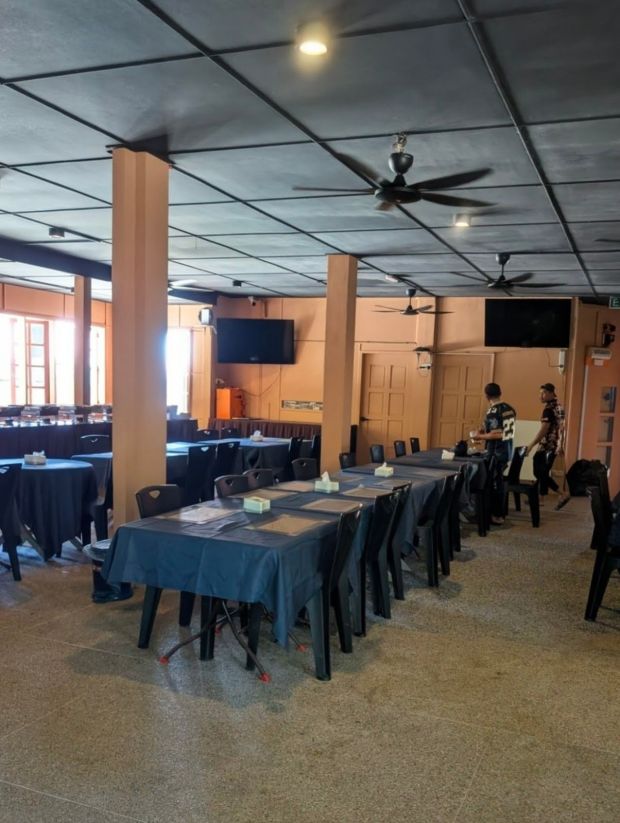
Dining room
After dinner, guests were asked to wait either in the cafeteria or on the terrace while rangers patrolled the beach. Guests are not permitted on the beach after dark to avoid disturbing the turtles. When a turtle lands, rangers send the eagerly awaited message: “TURTLE TIME!”
Each group is shown only one turtle, even if many land that night, to minimise disruption. Turtles can land at any time overnight. We were lucky and received the message at 8:15pm, allowing for a full night’s rest afterward.
When the message comes, you need to move quickly. Find your guide and head straight to the beach — it only takes minutes for a turtle to lay her eggs. Photography is allowed, but no videos or lights are permitted.
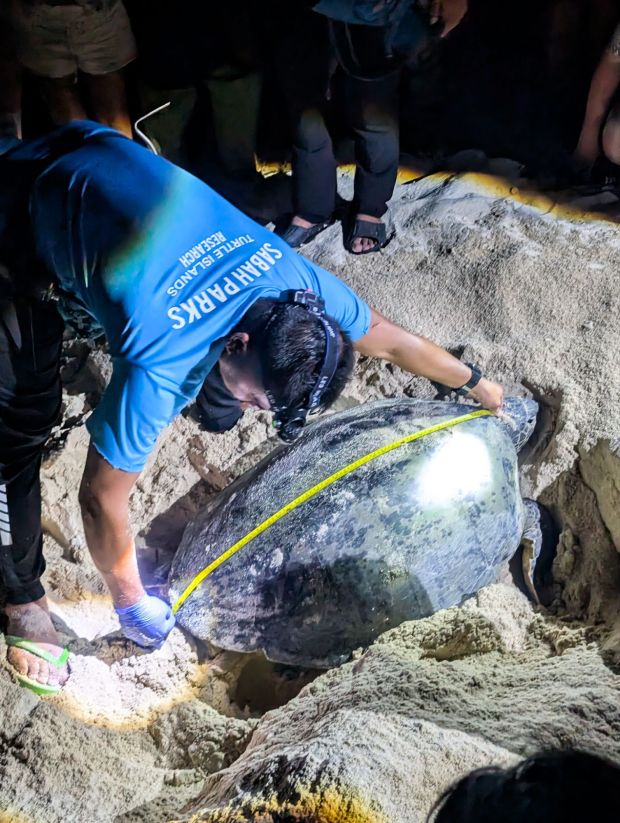
Measuring the turtles shell 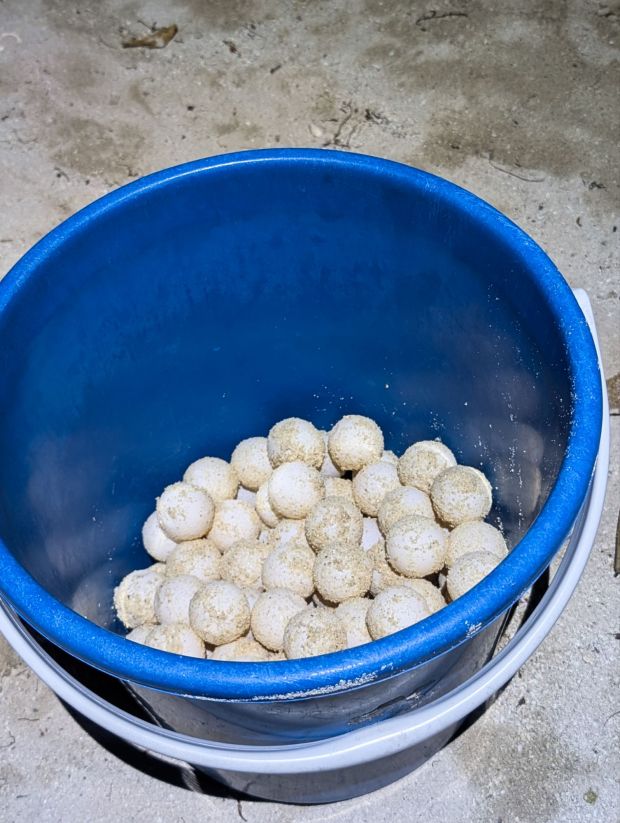
Clutch of eggs
After egg-laying (which can take anywhere from a few minutes to an hour), the ranger carefully counts and collects the eggs for relocation to the hatchery. The turtle’s shell is inspected, barnacles removed, and measurements taken before she rests and eventually returns to the sea.
We were then invited to the hatchery to observe how the eggs are repositioned — a process that must be done quickly, as development begins within two hours. I was fascinated to learn that nest temperature determines the sex of hatchlings: warmer eggs in the nest produce females, while cooler ones produce males. Each nest is protected with mesh and clearly marked with species, egg count, and date.
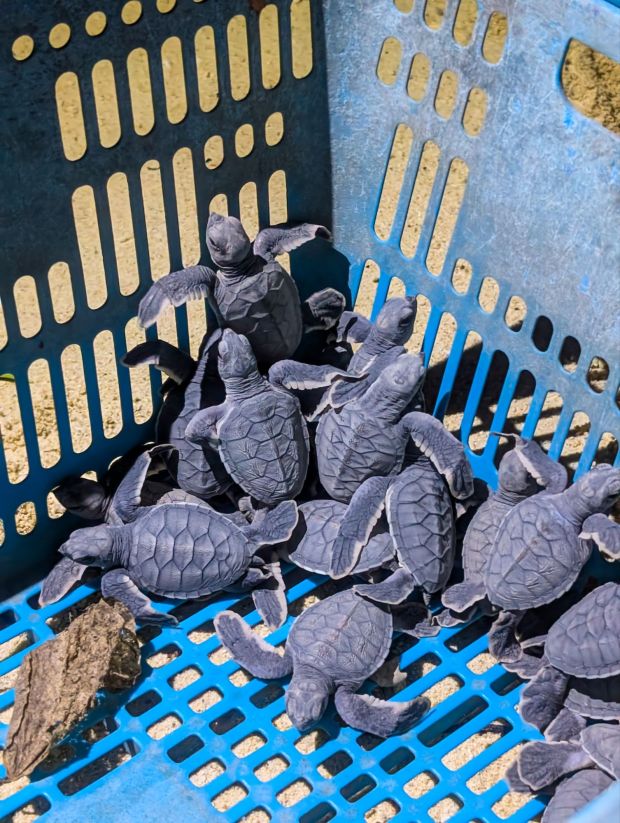
Releasing the hatchlings 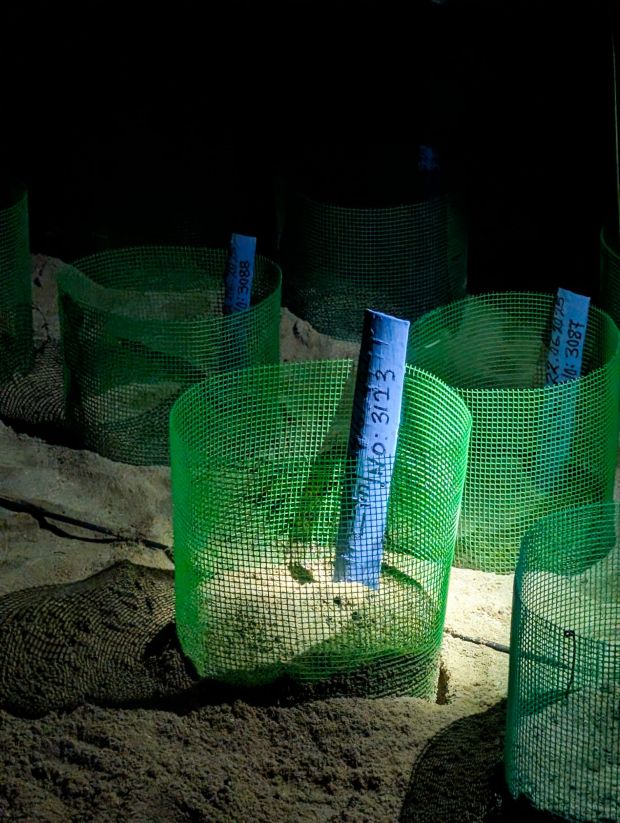
Eggs in the hatchery
There’s a very important reason behind all the counting, measuring, and note-taking. These details help rangers understand how often turtles return, how healthy the population is, and how successful each nesting season has been. Moving the eggs to the hatchery also protects them from predators and environmental risks, which massively increases the chances of the babies surviving.
Guests can also adopt a turtle nest for 150 MYR, which includes a certificate and t-shirt, plus an email notification when the eggs hatch. Eggs take around two months to hatch, after which hatchlings are released on the beach at night.
We were incredibly lucky to witness the release of newly hatched baby turtles, this really was a truly magical moment and a total bucket-list experience.
The Following Morning
We woke at sunrise to see how many turtles had landed overnight. The tracks and nests were clearly visible along the beach. That night, 30 turtles had landed – 29 green turtles and one hawksbill, which are much rarer due to their preference for soft coral.

Breakfast was served at 6:30am in the cafeteria, before boarding the boat back to Sandakan at 7:00am. The experience was exceptionally well organised, and we left not only with incredible photos but memories that will last a lifetime.
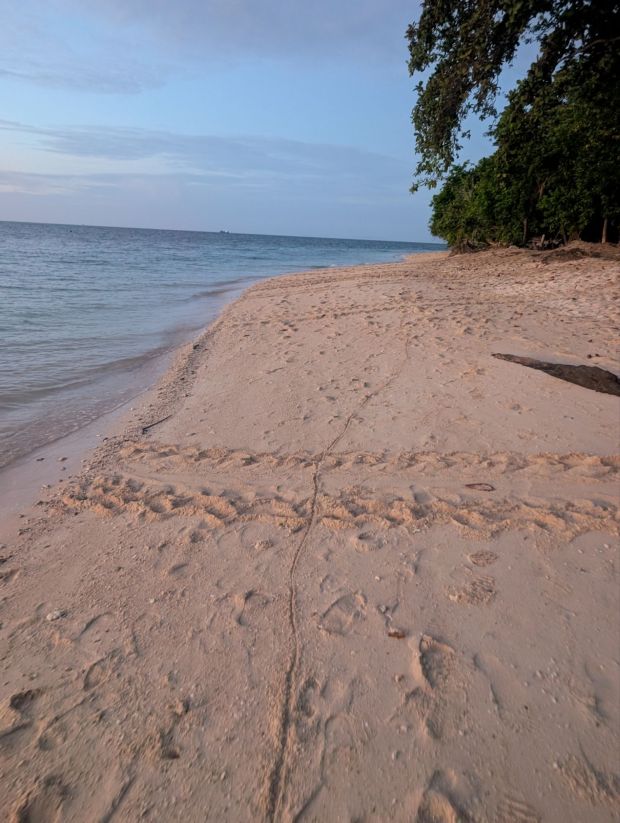
Turtle Tracks 
Lodging
Given the island’s remote location, I expected very basic accommodation, so I was pleasantly surprised. Our room had air conditioning (almost too effective!), electricity, and an ensuite bathroom with hot water. The rooms are rustic, but comfortable — and since you’re here for the turtles, not the room, it’s more than sufficient.
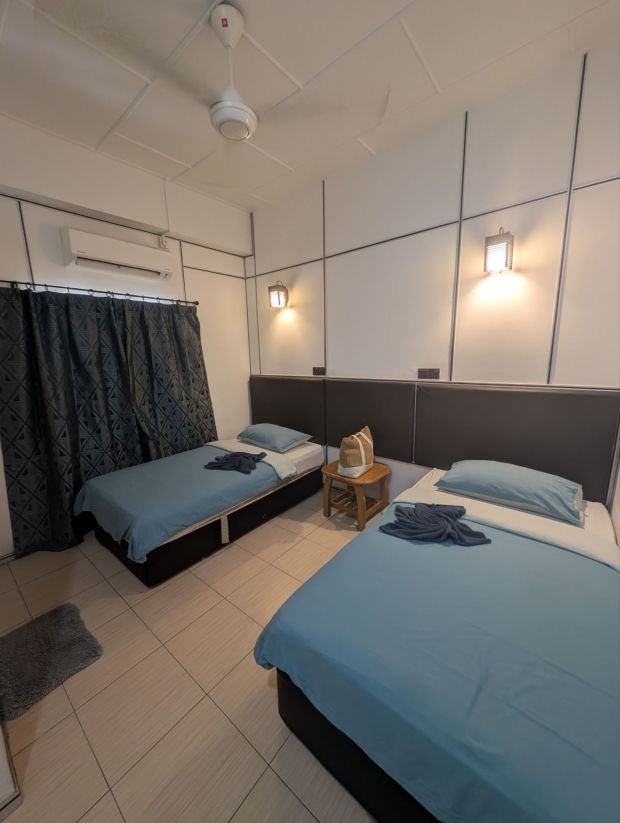
Our Room 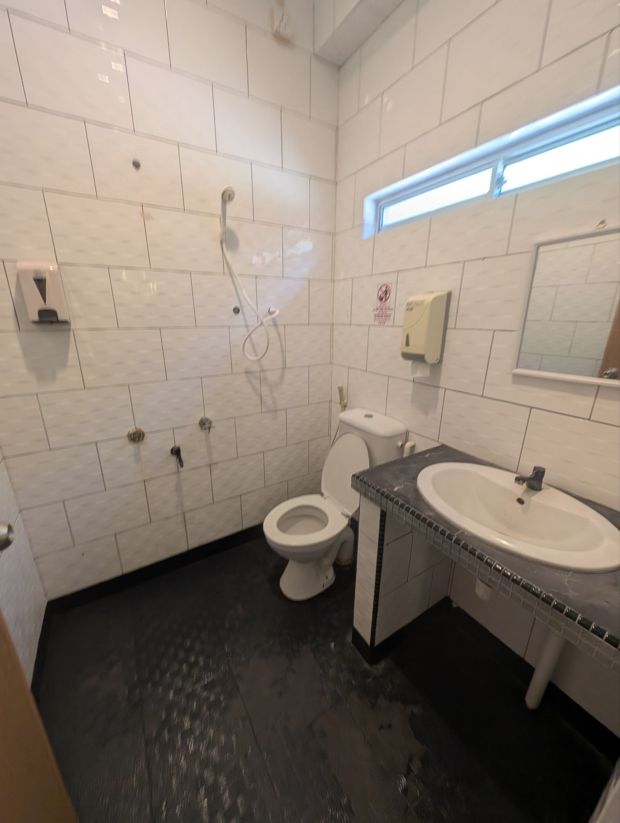
En Suite Bathroom
The bathroom is a wet room, so expect everything to get damp during showers. Basic body and hand wash are provided, but you’ll need to bring all other toiletries. There are UK plug sockets by the beds and a side table, but furnishings are minimal. Each chalet has a water dispenser, though the water is slightly warm.
Food and Drinks
All meals are included: lunch and dinner on arrival day, and breakfast on departure day.
Lunch and dinner are buffet-style, featuring rice, vegetables, and a variety of chicken and fish dishes with Malaysian and Asian flavours. The guide asked about dietary requirements upon arrival; I mentioned I was gluten-free, and while I used my own judgement during lunch and dinner, breakfast included a freshly made gluten-free fried rice, which was a welcome surprise!
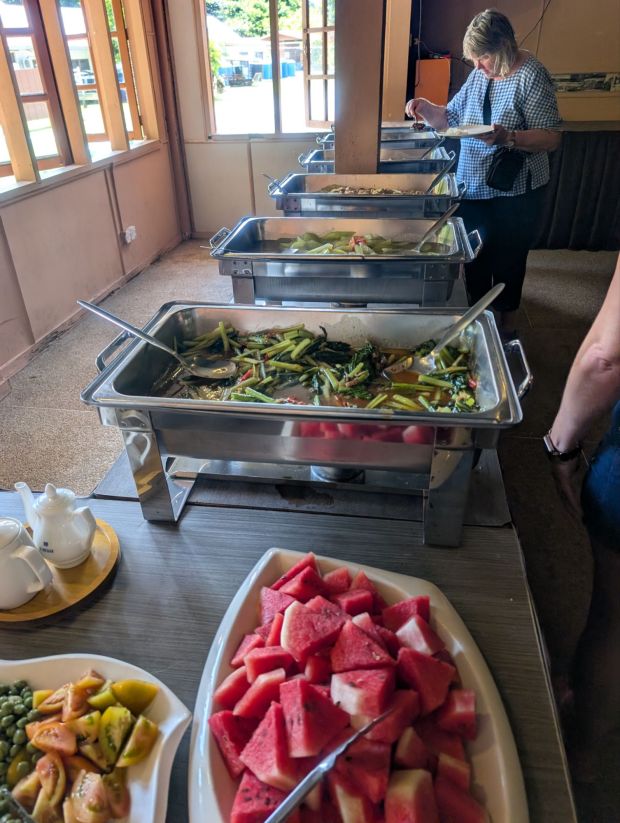
Buffet Lunch 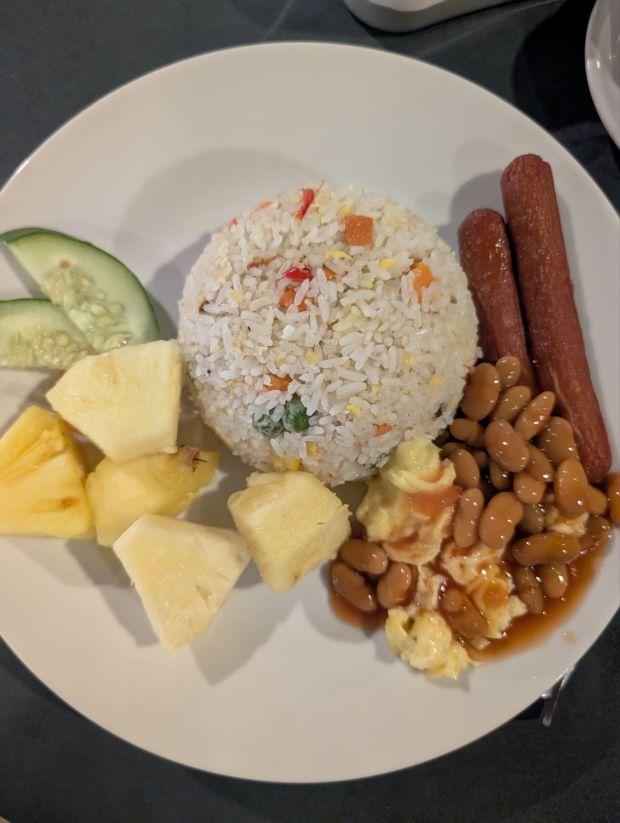
Breakfast
Breakfast options included scrambled eggs, sausages, baked beans, noodles, fruit, and toast, with coffee, tea, and water available.
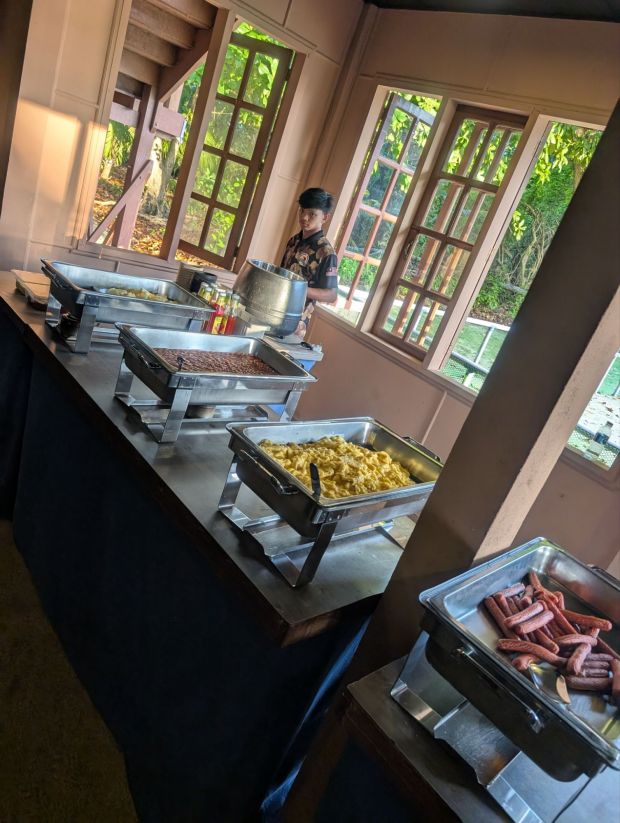
Buffet Breakfast 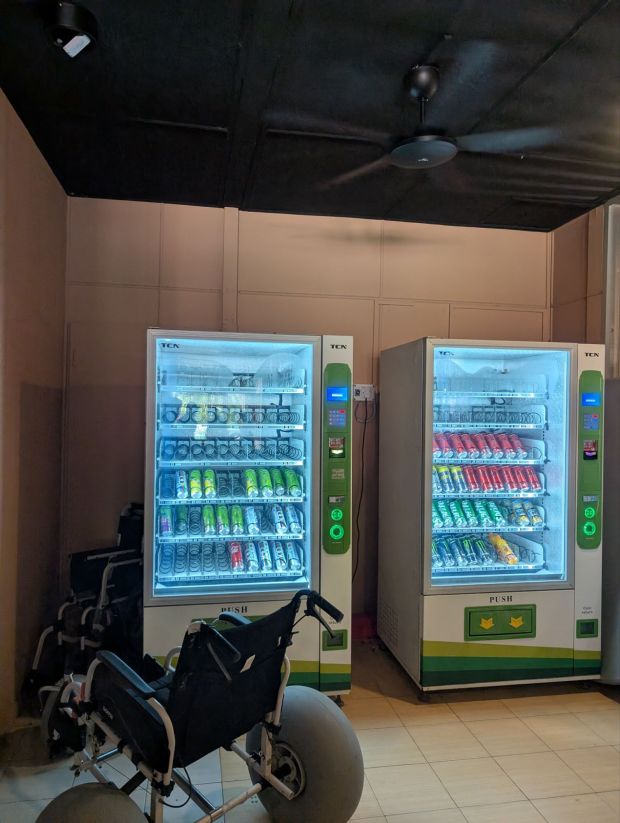
Vending Machines in the main dining room
There are also cash-only vending machines in the cafeteria selling juice, flavoured teas, soft drinks, and energy drinks. A small “shop” (essentially a fridge and table) stocks Pringles, pot noodles, and a limited selection of canned beers. If you want additional snacks or drinks, I would recommend bringing them with you.
Packing List
What To Bring
- Small backpack for your overnight stay (I highly recommend THIS stowable packable backpack, I’ve brought it on 20+ trips and it hasnt let me down)
- Swimwear / beachwear
- Flip flops
- Sunscreen
- Sunglasses
- Mosquito repellent (essential — especially in the evening)
- Toiletries (shampoo, conditioner, toothbrush, etc.)
- Pyjamas / sleepwear
- Cash for vending machines or snacks
- Quick-dry towel or beach throw (this is my go-to travel towel – it’s compact, lightweight, dries fast, doesn’t hold odours and comes in a bunch of colours)
- Lightweight clothing for evening and the next day
- Optional snacks and drinks
- Any medications you require
- Camera or phone for photos
What Not To Bring
- Drones (the island is a strict no-drone zone)
- Fancy clothing — it’s very casual and beach-focused

Seychelles? Or Borneo?! 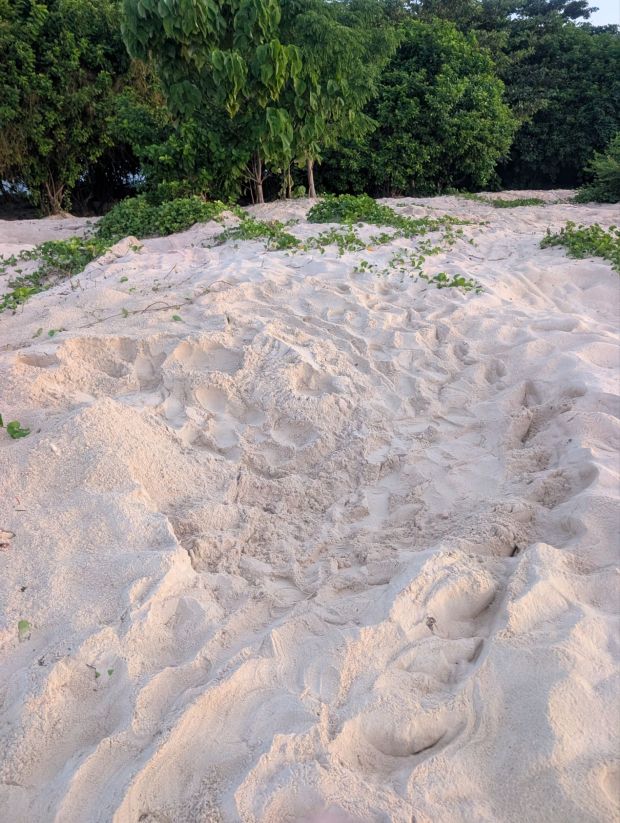
A Turtle Nest!
Ready to Book your Turtle Island Experience?
Book On Get Your Guide Book on Viator
You can find out more about my stay on my “Malaysia” Highlights on Instagram @chase.the.rainbows.
Disclosure: chasetherainbows.com participates in affiliate advertising programs as a way to earn revenue. Some links to products and services are affiliate links. I will earn a commission if you click an affiliate link and finalize a purchase at no extra cost to you. Thank you for your support.
We are a participant in the Amazon Services LLC Associates Program, an affiliate advertising program designed to provide a means for us to earn advertising fees by linking to Amazon.com and affiliated websites.
 CHASE THE RAINBOWS
One thought on “Turtle Island, Borneo – Full Guide and Why You Need To Visit”